Showing posts with label Non-fiction. Show all posts

Tuesday, August 29, 2006

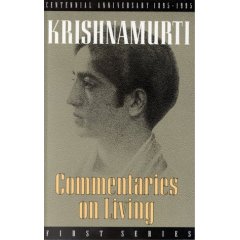
Commentaries On Living : J Krishnamurthy


Jiddu Krishnamurthy, the sage who would'nt be guru, had declined to accept the throne of the world master in 1930. The order of the star of the east was offered to krisnamurthy by Annie Besant the then chief of Theosophical Society. He was brought up by Annie Beasnt & Leadbeater in order to become the world master that they were awaiting. The twist in the tale came with the awakening of Krishnamurthy & he announced that truth can never be organised or cannot be sought with the help of any guru.

He died in 1986 in Ojai USA.

Although he refused any kind of guruhood but he went on to become a world reknowned teacher & preacher of his own experiences in the form of his discourses & writings. A small group also flourished around him by the name of Krishnamurthy Foundation.

Commenataries On Living is one of the many writings by Krishnamurhty. In this book he talks in details about every aspects of human life.

some excerpts from the book:-

The mind moves from the known to the known, and it cannot reach out into the unknown. You cannot think of something you do not know; it is impossible. What you think about comes out of the known, the past, whether that past be remote, or the second that has just gone by. This past is thought, shaped and conditioned by many influences, modifying itself according to circumstances and pressures, but ever remaining a process of time. Thought can only deny or assert, it cannot discover the new.

Disciplines, renunciations, detachments, rituals, the practice of virtue—all these, however noble, are the process of thought; and thought can only work towards an end, towards an achievement, which is ever the known. Achievement is security, the self-protective certainty of the known. To seek security in that which is nameless is to deny it. The security that may be found is only in the projection of the past, of the known.

For this reason the mind must be entirely and deeply silent; but this silence cannot be purchased through sacrifice, sublimation or suppression. This silence comes when the mind is no longer seeking, no longer caught in the process of becoming. This silence may not be built up through practice. This silence must be as unknown to the mind as the timeless; for if the mind experiences the silence, then there is the experiencer who is cognizant of a past silence; and what is experienced by the experiencer is merely a self-projected repetition. The mind can never experience the new, and so the mind must be utterly still. The mind can be still only when it is not experiencing, that is, when it is not terming or naming, recording or storing up in memory.


This book, I love a lot.

Saturday, August 26, 2006

Tao Te Ching : Lao-tzu


Tao Te Ching roughly translated as the 'The Way & It's Virtue' was written by Lao-tzu in around 600 B.C.
Lao-tzu, a chinese philosopher & contemprory of Buddha, was considered to be a man of wisdom in his country. Somewhat eccentric in nature, Lao-tzu, talks about the way to enlightenment in a very awkward way. The name Lao-tzu means the old man. Since his childhood he was as wise as any old man & that's why he was named as such.

Tao Te Ching being the only book written by Lao-tzu carries a very strange & interesting story behind it's creation.
Lao-tzu, on the order of king of China was caught on the borders when he was on his last journey towards the Himalayas. The king's order were very clear that Lao-tzu should not be allowed to go untill & unless he writes his teachigs in form of a book. Miserably, Lao-tzu wrote Tao Te ching. But did'nt wrote a single word about Tao(the way) in the whole book.

He starts the book with these sentences:-

The Tao that can be told of is not an Unvarying Tao;
The names that can be named are not unvarying names.
It was from the Nameless that Heaven and Earth sprang;
The named is but the mother that rears the ten thousand creatures,
each after its kind.


On the introductory page Lao-tzu writes:-
My words are very easy to understand ; yet no one under heaven understands them.

The Tao Te Ching can be seen as advocating mostly "feminine" (or Yin) values, emphasising the qualities of water — fluidity and softness (instead of the solid and stable mountain), choosing the obscure and mysterious aspect of things, and controlling things without ruling them, in other words to 'have without possessing'. In this respect, this book can be understood as challenging "male" (or Yang) values such as clarity, stability, positive action, and domination of nature; such values are often referred to as Confucian values. Yet a perfect balance between the Yin and Yang is still encouraged.

Something more of wisdom from the book:-

So a wise leader may say: I practice inaction, and the people look after themselves

Knowing others is wisdom;
Knowing the self is enlightenment.
Mastering others requires force;
Mastering the self requires strength;

The contrast of opposition — i.e. the differences between male and female, light and dark, strong and weak, etc. — helps us understand and appreciate the universe.

The harder one tries, the more resistance one will create for oneself.

When the spring comes, grass grows on it's own.


This book, I love a lot.

Sunday, August 20, 2006

The World As Will & Idea : Arthur Schopanhauer


The World as will & idea, although this book was rejected by most of the contemprory thinkers of Schopenhauer but still, I fell in love with this book as soon as I started reading it. The book was published in 1844.
What strikes me most is the style of this book. Here is no chinese puzzle of kantian terminology, no hegelian philosophy but there is blunt honesty, refreshing vigour & uncompromising directness.

The book starts with the first sentence of Schopenhaeur , 'The world is my idea'.
The most vital part of the first section is the attack on materialism. 'How can we explain mind as matter, when we know matter only through mind ?'.

In the second section i.e. The world as will he writes ' Consciousness is the mere surface of our mind, of which, as of the earth, we do not know the inside but only the crust'.

He ends this book with a sentence which I think partly became the cause of rejection of this masterpiece ' No time can be more unfavorable to philosophy than that in which it is shamefully misused on the one hand to further political objects, on the other hand as a means of livelyhood.

This book, I love a lot.

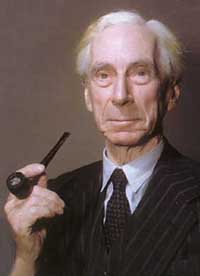
Bertrand Russell


I appologize dearly to all the readers as I have again deviated from the topic of books to the authors. But in this case it was necessary;just to save time & space.

Bertarnd Russell, the logician,philosopher,thinker,mathematician & the reformer, was born in Britain in 1872. He was awarded Nobel Prize in 1950.
There have been two Bertrand Russells : One who died during the war; & another who rose out of that one's shroud, an almost mystic communist born out of the ashes of a mathematical logician.Perhaps there was a tender mystic strain in him always. I tried to focus myself on the later Bertran Russell.

I had a chance to read four of his books:

1). An Inquiry Into meaning & Truth :-In this book Russell is concerned with the foundation of knowledge. He approaches his subject through a discussion of language, the relationship of truth to experience & an investigation into how knowledge of the structure of language helps our understanding of the world.

2). Analysis Of Mind :- This book has grown out of an attempt to harmonize two different tendencies, one in psychology, the other in physics, with both of which Rusell found himself in sympathy, although at first sight they might seem inconsistent. On the one hand, many psychologists, especially those of the behaviourist school, tend to adopt what is essentially a materialistic position, as a matter of method of metaphysics. In this book, Russell talks about consciousness, desires, instincts & habbits.

3). Why I am not a christian :- This book actually is the collection of Russell's lectures & debates over his firm postion of atheism. Russell deeply goes into human mind in order to investigate the origins & causes of religion. Like Nietzsche Christianity is symbolic for Russell's rational ideas. He opposed all the organised religions.

4). The Roads To Freedom :- This is political doctorine of Russell. A pro-revolution book in which Russell developed his specific political idealogy more clealry than in any other book that he wrote during the first world war.

Monday, August 07, 2006

A General Introduction To Psychoanalysis : Sigmund Freud


A General Introduction To Psychoanalysis is the classic work of father of psychoanalysis Sigmund Freud. The book was written or rather published in 1938 as it the collection of Freud’s lectures on psychoanalysis on different places.

Freud is one of those fews who influenced the whole thinking of humanity. After Freud the thing were never as they used to be.
Although controversial, his theory ( Oedipus & Electra Complex) earned him the very name & fame that he rightly deserved. Today most of the part of his theory is disregarded in the light of modern psychology but no one can question the remarkability & importance of his work.

I did’nt mentioned here his major known work Interpretation Of Dreams simply because A General Introduction To Psychoanalysis covers most of the part of that book.

This book opened new doors for me & that is human mind.

This book, I love a lot.
Thursday, August 03, 2006

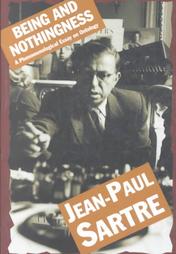
Being & Nothingness : Jean-Paul Sartre

Being & Nothingness. In that work, Jean-Paul Sartre attempts to straighten out a question that had eluded Descartes, Kant and Leibniz, and to a lesser extent Heidegger and Bergson: What is the relation of being to its nothingness? Bergson, for example' posited the act of duration, in which organization is melodic, involving a multiplicity of interpretations. Anyone who has been in a meetings, knows there are always competing perspectives and interpretations of events. Sartre, however, points out that if we talk of "temporality" then duration, as a multiplicity of interpretations, must presuppose "an organizing act".

Kant, in contrast to Bergson, did not see a synthesis in a multiplicity and the organizing act. At issue, for organization theory, is the terrain of "collective memory." For Bergson, the past interpretations cling to those of the present, penetrating the present in the form of memory, which is "ekstatically in the Past." What is ekstatic? For, Sartre's theory of temporality and organizing, ekstatic is not one, but three dimensions. And this is one of many contributions he makes in Being & Nothingness.

Sartre's contribution was to move from the philosophy of "I think, therefore I am" to "I think; therefore I was". The problem for organization studies is to answer the question of how is it that organizations change and are interpenetrated by permanence (what does not change In-Itself), and collective memory (that is being perpetually restoried), in time? Duration of organization presupposes an organizing act which is antenarrative, foreshadowing the nihilation of In-Itself and the becoming For-Itself. Organizing is the multiplicity and interpenetration of Being & Nothingness.

This book, I love a lot.

Tuesday, August 01, 2006

Psychosynthesis : Roberto Assagioli

First book that I am mentioning this month is Psychosynthesis by Roberto Assagioli. This book is remarkable in the sense that it laid the foundation stone for bridge between psychology & mysticism.

Roberto Assagioli's ideas can be encapsulated in a nutshell (egg) with the Greek concept of Gnothi Seauton - Know Thyself. Psychosynthesis allows for an in-depth journey of discovery that will be different for every individual; yet the journey embodies similar experiences attained through similar techniques.

The text is in a slightly clinical style, which is not surprising considering that Assagioli had a background in Psychoanalysis and Psychiatry. This book was most likely written to showcase his Psychosynthesis concepts to his peers in Psychiatry who had a Freudian background.
However, don't let the prospect of a slightly clinical styled book put you off. If you are interested specifically in Psychosynthesis it is an essential read, and also highly recommended if you are in any way interested in Transpersonal Psychology or Self Development.

Assagioli's comments on the "Spirit of Synthesis" bring to mind the concept (doctrine) of the 4 Elements in Western Qabalistic thought, where Earth, Air, Fire and Water are brought together (synthesised) into harmony to give rise to Spirit (i.e. all 4 elements when in harmony are pure/refined spirit).

Assagioli comments that the most important results in Psychotherapy have come about from independent researchers rather than academic psychologists. This is perhaps due to the independent researchers (seemingly he refers mainly to medical and psychiatric doctors) have a great deal of experiential evidence and build their theories from observing a vast array of clients, rather than formulating theories based on laboratory experiments, other people's theories, or personal fancy.

A key diagram in Psychosynthesis is the 'Egg diagram' that provides a simple but effective map of consciousness and framework for understanding the psyche. Assagioli describes the outer 'shell' of the 'Egg diagram' using the words "delimiting not dividing", which to me really encompasses the ideas of boundaries. Although we are all part of the 'oneness' we have boundaries, which are very important to us as individuals. We are delimited by these boundaries, not divided (cut-off) from all else. The whole concept of an egg is great, as eggs are permeable even though seemingly hard shelled.
Two important concepts within Psychosynthesis are identification and dis-identification, the importance of which are briefly touched upon in the quote:
"We are dominated by everything with which our self becomes identified. We can dominate and control everything from which we dis-identify ourselves."
Assagioli outlines two approaches to Self-growth. Personally I favour the second approach, the intuitive method, of listening to "the Spirit within" - guidance by the Higher Self, and following feelings and intuitions.

Assagioli talks about childish dependence carrying on into later life either on the parents or other individuals. This is really the root of co-dependence. Although Assagioli probably hadn't developed anything specific (at least terminology-wise) on co-dependence it certainly indicates he had experience dealing with and understanding these issues.

It would seem Assagioli was very much a product of his training in Freudian thought, and Psychiatry (and also his Qabalistic thought, although this doesn't easily show through in his writing). Assagioli was really the seed or beginning point of Psychosynthesis, developing the system from his own theories and experiences, and from tools and techniques he had worked with in Psychiatry and Psychotherapy fields. His "version" carries with it an aura that is the product of his own Self. Modern teachers of Psychosynthesis impart an aura that is the product of their own Self, and living "sum total" of their experiences. Sometimes their teachings on Psychosynthesis draw on other things such Shamanism, co-dependency, Jungian concept, plus all of their own insights and wisdom.

This book I love a lot.

Thursday, July 27, 2006

Tractatus Logico Philosophicus : Ludwig Wittgenstein


Ludwig Wittgenstein's Tractatus Logico Philosophicus is one of the most remarkable book I ever came across. For me, this book depicts the very insight of a human being and intelligence. But if I am truly asked I would say that there is nothing unusual in this book other than one sentence with which Wittegenstein ends his book Whereof, one cannot speak thereof, one must be silent or I would simplify it That which cannot be spoken about must be passed over in silence.

This contribution to the new readings of the early Wittgenstein presents in detail how one might read the Tractatus as a sustained attack on Frege's and Russell's philosophical and logical conceptions while at the same time presuming Wittgenstein to have always been in some sense a "late Wittgensteinian," that is, already embarked on the therapeutic task of setting down "the way of release" from philosophical confusion and "ensnarement of thought" (1). Taking seriously the passage in the Tractatus (6.54) in which Wittgenstein assesses his "elucidations" as "nonsensical," Ostrow places himself among those readers who infer that straightforward theory-making was not Wittgenstein's aim, but differs from them in his original and challenging account of how the propositions of the Tractatus are nonsense.

This book, I love a lot.
Tuesday, July 25, 2006

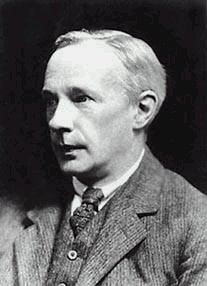
Principia Ethica : G . E. Moore


Another book I am mentioning here is G. E. Moore's Principa Ethica. Moore is one of the most important, and the most overlooked, figures in Analytic philosophy. All too many historical surveys of early Analytic philosophy treat him as attached to Bertrand Russell’s hip, and as soon as they have got done discussing their joint break with Absolute Idealism and offered a rather Russellian understanding of Moore’s work on Analytic method, they pretty quickly move on to talk about what’s taken to be the heavy-duty stuff: Principia Mathematica, Wittgenstein, and the Vienna Circle. All of this is too damn bad; for as valuable as the parts of Analytic method that Moore and Russell developed more or less in tandem are, there are in the end deep differences between Moore and Russell, in the motivations that led each to adopt Analytic method and the understanding of the aim and right method of philosophy that resulted for each.

G. E. Moore in his seminal Principia Ethica stated that a naturalistic fallacy was committed whenever a philosopher attempts to prove a claim about ethics by appealing to a definition of the term "good" in terms of one or more natural properties (such as "pleasant", "more evolved", "desired", etc.).

The naturalistic fallacy is related to, and often confused with, the is-ought problem (as formulated by, for example, David Hume). As a result, the term is sometimes used loosely to describe arguments that claim to draw ethical conclusions from natural facts.
Alternately, the phrase "naturalistic fallacy" is used to refer to the claim that what is natural is inherently good or right, and that what is unnatural is bad or wrong.

This book, I love a lot.

Monday, July 17, 2006

Thus Spake Zarathustra : Friedrich Nietzsche


Thus Spake Zarathustra, became for me one of the books with whom I cannot avoid loving ever since I read it. It is the masterpiece of Nietzsche.

Friedrich Nietzsche, German Philosopher (1844-1900), was appointed professor of classical philology at the university of Basel in 1869. Thus Spake Zarathustra is the title by which Nietzsche is popularly known, the work's literary genre has placed a considerable obstacles in the path of it's author's reception as a serious philosopher. However, in Nietzsche's case, to question whether his writings are artistic or philosophical is profoundly misleading.

In Thus spake Zarathustra Nietzsche rejects the Christian ideas of God in favour of the superior powers of the superman. This superman would be any man who throws off the shackles of religion (in this case Christianity, but relevant to any religion conforming society) and creates his own values. Only under heavy distortions allows it to appear to fit in with the ideals of Adolf Hitler's Third Reich movement. It may see a much purer model in the future, where the mass realisation - God is dead or more accurately never alive in the first place and man takes full control. Here man may use scientific knowledge such as genetics engineering combined with spiritual knowledge through meditative techniques to evolve to a vastly superior being.

Though Nietzsche once lamented that he wrote rather than sang, for most of his creative life there was never any rigid distinction between the literary and philosophical dimensions of thinking. In Thus Spake Zarathustra Nietzsche allows his imagination full rein. To quibble about the philosophical or literary status of the text is foolish. What matters is the subject matter of the endeavour rather than its formal idiom. There is no doubt that Thus Spake Zarathustra was written by Nietzsche as if he were possessed by a tormented and tormenting muse.

He writes that when Zarathustra was thirty years old, he left his home and went to the mountains for the enjoyment of his spirit and his solitude. He came down ten years later and met and old man to whom he said, ' dont you know that the god is dead '. And from here starts the journey of Zarathustra where he meets many persons whom he discourses.

I would like to quote an elegant remark of AJ about Nietzsche, ' Nietzsche, for me draws very blur and thin line between reason and insanity. '

But Nietzsche, for me, was an unfortunate fellow. He knew everything about the superman but never became one. He filled his mind with so much questions but failed to find the answer. He lived the last ten years of life in a mental asylum and died in 1900 in a very desperate manner.

But he left his legacy in the shape of Thus spake Zarathustra.

This book, I love a lot.

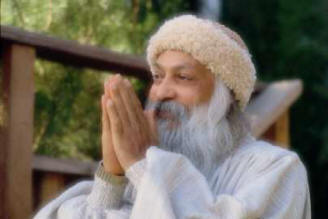
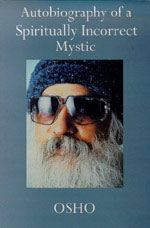
Autobiography of a Spiritually Incorrect Mystic : Osho


This belongs to one of the most notorious person in human history. Yes, in every sense Osho was notorious. But that very thing adds to his beauty. I fell in love with Osho when I was merely 16. He was a conman, as he calls himself. He used all the big names of Buddha, Jesus, Mohammed, Moses, Zarathustra, Krishna, Mahavira for his own purpose. The very core of his teaching was meditation. He developed nearly 112 meditation techniques.

Osho never wrote a book in his life. All the books on his name are the written form of his oral discourse which spreads in 650 books. One may find it hard it believe that the man spoke much. This book, Autobiography of a spiritually incorrect mystic, the collection his talks with his dentist and caretaker when he was in public silence.

The very title of the book is eye catching. One may never understand Osho untill & unless one does not understand oneself. In his own words from the book:-

If you really want to know who I am, you have to be as absolutely empty as I am. Then the two mirrors will be facing each other, and only empitness will be mirrored. But if you have some idea, then you will see your own idea in me.

He also talks about his own story and believe it's extra-ordinary.

In college I used to wear a long robe, with a wrap- around LUNGI as it is used in India, and with no buttons on the robe so the chest is open. The principal told me, ' Coming to college without buttons is not according to etiquette .' I said to him, ' Then change the etiquette, because my chest needs fresh air. And I decide according to my needs, not according to anybody's idea of etiquette. '

My mother came to me, she was a little worried. She said, ' It is beautiful to see you dancing, but now you have started dancing with the girls ! ' She was concerned that if people in India see this, in the pictures, on the videos, they will be very much shocked. I said, ' So far, so good. But I am free- more free than Gautam Buddha, more free than Mahavira. Gautam Buddha did not have the guts to dance with the girls.

I want the world to know that I have ninety-three Rolls Royces because that is the only way to make any bridge. And then I can talk about the truth and enlightenment, too, on the side. Without Rolls Royce there is no communication at all. I know my business perfectly well.

In the book, he talks about his whole transformation, his enlightenment, his childhood, his youth and in the later part he talks about his commune and his groups. For him the Novo-Humane will be like Zorba-the Buddha. Dancing and enjoying like Zorba the Greek and silent from within like Gautam The Buddha.

Osho, for me, is the superman Friedrich Nietzsche used to talk about. He was the superman among the supermans. He was the best among the bests.

For generations to come of enlightened persons, Osho has created a difficulty now. Now, the primitive idea of enlightenment is no more and all the credit goes to Osho.

This book along with this person whom we call Osho, I love a lot.

Saturday, July 15, 2006

The Rise & Fall Of The Third Reich: William Shirer


The fifth book I am metioning here belongs to a well known historian William Shirer and the book is The Rise and Fall of the Third Reich.

It is history of whole second world war including a very good sketch of Adolf Hitler's life. What impressed me was the style of Shirer's. The way he put the events into words is brilliant.

The book throws a detail light on each and every events of the war.

Though William Shirer himself had served under third reich during the first half of it's brief life, watching at first Adolf Hitler consolidate his power as dictator of the great but baffling nation.

For me, this book is like an encyclopaedia of world war second and Adolf hitler.

The book was first published in 1960 and untill today this work of Shirer's has no match as far as the history of second world war is concerned.

This book, I love a lot.

The Katha Upanishad


The Katha Upanishad or Kathopnishad is basically not a book but it is an exercept taken from Yajur Veda.

It is a story of a brahmin boy Nachiketa whose father Uddalaka, once conducted a ritual. In the end of the ritual he had to give some cows to the participant brahmins as a gift. Being a cunning man Uddalaka chose weak & sick cows to gift. Nachiketa ,when saw the shrewdness of his father, started nudging him whom he will gift his son to. In the beginning Uddalaka simply ignored his son's question but finally he got irritated and said to Nachiketa that, " I will gift you to Yamraj ( the god of death) ".
Nachiketa took this as an order and started on a journey to Yamlok, the home of Yamraj.
On reaching Yamlok, he found that Yamraj was out. Therefore he decided to wait outside. He waited for three days without eating anything.
Yamraj, when came back, found Nachiketa waiting. On asking, Nachiketa narrated him the whole story. Yamraj was impressed with Nachiketa's will and obedience. He granted three wishes to Nachiketa.
For the first wish Nachiketa asked that ,' let my father's anger be cooled down and when I go back he would love me as ever'. Yamraj agreed.
For the second wish Nachiketa asked that, ' fire is behind all the pleasures of heaven. This earth is also made up of fire. So please give me the knowledge of power'. And Yamraj agreed.
For the third wish Nachiketa asked Yamraj to let him know the secret of all secrets the brahma - gyan itself. This time Yamraj was shocked. He tried to persuade Nachiketa to ask for something else. But Nachiketa did not moved. In the end Yamraj had to give what Nachiketa asked for.
This whole Katha Upanishad is the dialogue between Nachiketa and Yamraj about the brahma-gyan. And the whole dialogue is immensely beautiful. There are some places where the reader gets confused but one shouls always keep in mind that the thing which Yamraj is talking about, cannot be said , but only can be experienced.

Some of the dialogues are:-

Yamraj says,'The brahma is universal and omni-potent. But it cannot be achieved by listening discourses or reading books but it is achieved only by those whom it accepts from it's own'.

Yamraj says,' If your senses are indulged in the outer world, you are going to miss it. For example your eyes sees the whole outer world but does not sees it in your heart. Your ears hear everyhting but misses the sound of it.

Yamraj says,' One who knows this secret , will not speak. But he will be silent. And he spontaeously resides in the kingdom of it.

The author of this upanishad is unknown. By the way there are atleast 108 upnishads said to have been written nearly around 1500-600 B.C.

The word upnishad simply means to sit near the GURU and listen.

This book, I love a lot.

Man's Search For Meaning : Victor Frankl


The third book I am mentioning here belongs to an eminent pshychiatrist Victor Frankl and the book is Man's Search for meaning. This book is an autobiographical account of frankl's days in concentration camp.

Frankl was arrested in september 1942 along with his new bride, his mother, father & the brother in Vienna. They were taken to a different concentration camps. Frankl was subjected to Bohemia's concentration camp. He was freed by American Army in april 1942, only to find out that all his loved one's are dead. He was then given a position of a director in Vienna Neurological Polyclinic where he served for 22 years.

This book is divided into two parts. First contains his experiences in concentration camp & the second contains his psychiatric theory- logotherapy.

For me, both the parts are worth reading. It is fascinating to see the life in concentration camp from an eye of a psychiatrist. What it seems that, yet in the moments of utter despair and sorrow , Frankl tried to maintain his vision. What he writes, is surely thinkable.

In his own words:-

There were many similar surprises in store for new arrivals. I would like to mention a few of them: we were unable to clean our teeth, and yet, in spite of that and a severe vitamin deficiency, we had healthier gums than ever before. I learned there that all medical textbooks tell lies.

Because of the high degree of undernourishment which the prisoner suffered, it was natural that the desire for food was the major primitive instinct around which mental life centered. The majority of prisoners when happened to work near each other , would start discussing food.

For the first time in my life, even in moments of utter desolation I knew a truth. The truth- that love is the ultimate and highest goal to which man can aspire. Then I grasped the meaning of the greatest secret that human poetry and human thought and belief have to impart: the salvation of man is through love and in love.

The second part of the book contains his psychological theory: Logotherapy
Logotherapy postulates a will to meaning.
Will to find the meaning of life in love, essence of existence and in suffering.

Frankl quotes Nietzsche in the perface, ' He who has a why to live can bear with almost any how'.

Altogather, this book presents an idea that one can keep his individuality intact in worst situations also.

This book, I love a lot.

Beyond Good & Evil : Friedrich Nietzsche

The second book I am mentioning belongs to the one of the most influential thinkers of all time : Friedrich Nietzsche & the book is Beyond Good & Evil.

Nietzsche was controversial to the marrow and still is controversial. This book of his Beyond Good & Evil followed his famous work Thus Spake Zarathustra. But here instead of talking about his superman Nietzsche simply summed up his philosophy- but in less flamboyant and more systematic form. The various parts of the book are designed to give idea of Nietzsche's thought.
It is interesting to read Nietzsche's comments about the prejudices of philosopher, the free spirit, virtues and nobility.

But for me, the core part of the book is epigrams and interludes section of the book which contains various qoutes of Nietzsche.
Some of them I should mention:-

1. " knowledge for it's own sake"- that is the last snare of morality: with that one becomes completely entangled in it once more.

2. Love of one is barbarism; for it is exercised at the expense of all others. The love of god too.

3. Whoever despises himself still respects himself as one who despises.

4. A soul that knows it is loved but does not love itself betrays it's sediments: what is at the bottom comes up.

5. If we train our conscience , it kisses us while it hurt us.

6. Whatever is done from love always occurs beyond good & evil.

So, this was the man like. But one may find some of the Nietzsche's remarks on women as hideous. But the fellow never cared while writing this book what we are going to make out of his remark.

In his own words from this book -" In truth the matter is different: while you pretend rapturously to read the cannon of your law in nature, you want something opposite, you strange actors and self deceivers ! Your pride wants to impose your morality, your ideals on nature- even on nature- and incorporate them in her".

The book was first published in 1886. Nietzsche experimented himself of having something published at his own expense; assuming to cover his expenses if 300 copies were sold. Unfortunately this did not happened. Only 114 copies were sold in 5 years. But by 1903, 17000 copies were in print & today this book is considered as classic. But Nietzsche never lived to see all this. He died in 1900.

Altogather, this book offers some thing vague and dramatic ideas.

This book, I love a lot.

Meetings With Remarkable men : G. I. Gurdjieff


The first book I am mentioning here is G. I. Gurdjieff's Meetings with Remarkable Men. This is 2nd series of his collected work All And Everything.

G.I. Gurdjieff(1877-1949), literally unknown mystic was born in Alexandropol and trained in Kars as both physician and a priest. Later on he formed a society Seekers Of Truth and went on travelling the remotest regions of central Asia and Middle east. He also went to India and Tibet in order to seek the truth. This journey of his lasted for about twenty years. These years were crucial in the moulding of his thought. On his return, he began to gather pupils in Moscow but had to fled away during the Russian revolution. P. D. Ouspensky, a well known Russian mathematician, discovered Gurdjieff when he was hiding in the hills of Caucasus. Later on gurdjieff settled in the outskirts of Paris where he opened his Institute for the Harmonious Development of Man in 1922 on a larger scale.

This book of his, is an autobiographical account of his journey. The book contains the memoirs of Gurdjieff with numerous people whom he considered remarkable. These people namely his own father, his first tutor Dean Borsh, Bogachevsky, his companion during many journeys Captain Pogossian, his friend Abram yelov, Seeker like himself Prince Yuri, Ekim Bey, karpenko and Proff. Skridlov. For Gurdjieff, these men helped him to understand the very core of human intelligence. For me, these men were painters who painted the man whom we all know by the name of George Ivanovitch gurdjieff.

Every chapter of the book resembles not the remarkability of these men but also the insight of the author. What I liked the most was the style of writing the book. As if I was reading a novel or watching a movie. Gurdjieff mentions his father as a practical man. He writes in the book some of the subjective sayings of his father-

1. Without salt, no sugar.

2. He is deep down, because you are high up.

3. If a man is coward, it proves he has will.

4. Truth is that from which conscience can be at peace.

5. He is stupid who is ' clever'.

6. Happy is he who does not sees his unhappiness.

7. If you wish to be rich, make friends with the police. If you wish to be famous, make friends with the reporters. If you wish to be full--with your mother-in-law. If you wish to sleep--with your wife. If you wish to have peace--with your neighbour and if you wish to loose your religious faith make friend with the priest.

In the word of gurdjieff that man can be called remarkable who stands out from those around him by the resourcefulness of his mind, and who knows how to be restrained in the manifestations which proceed from his nature, at the same time conducting himself justly and tolerantly the weaknesses of others.

The book was first published in 1963. But the manusripts were complete in 1927 and was revised by Gurdjieff over a period of many years. The book was originally written in Russian and later on translated in English.

This book, I love a lot.